2026
Völklingen, Germany
In frame of Urban art biennale at the Völklinger Hütte, curated by Frank Krämer
The idea for the project was born in the atmosphere of the decommissioned Völklingen Ironworks. Strolling among the giant machines – those dragons of the industrial era – I tried to discern their former rhythm: the roar of flames, the clang of metal, and the heavy footsteps of the ironworkers. Where is the place of humans here? How did their bodies fit into this monstrously beautiful mechanism?
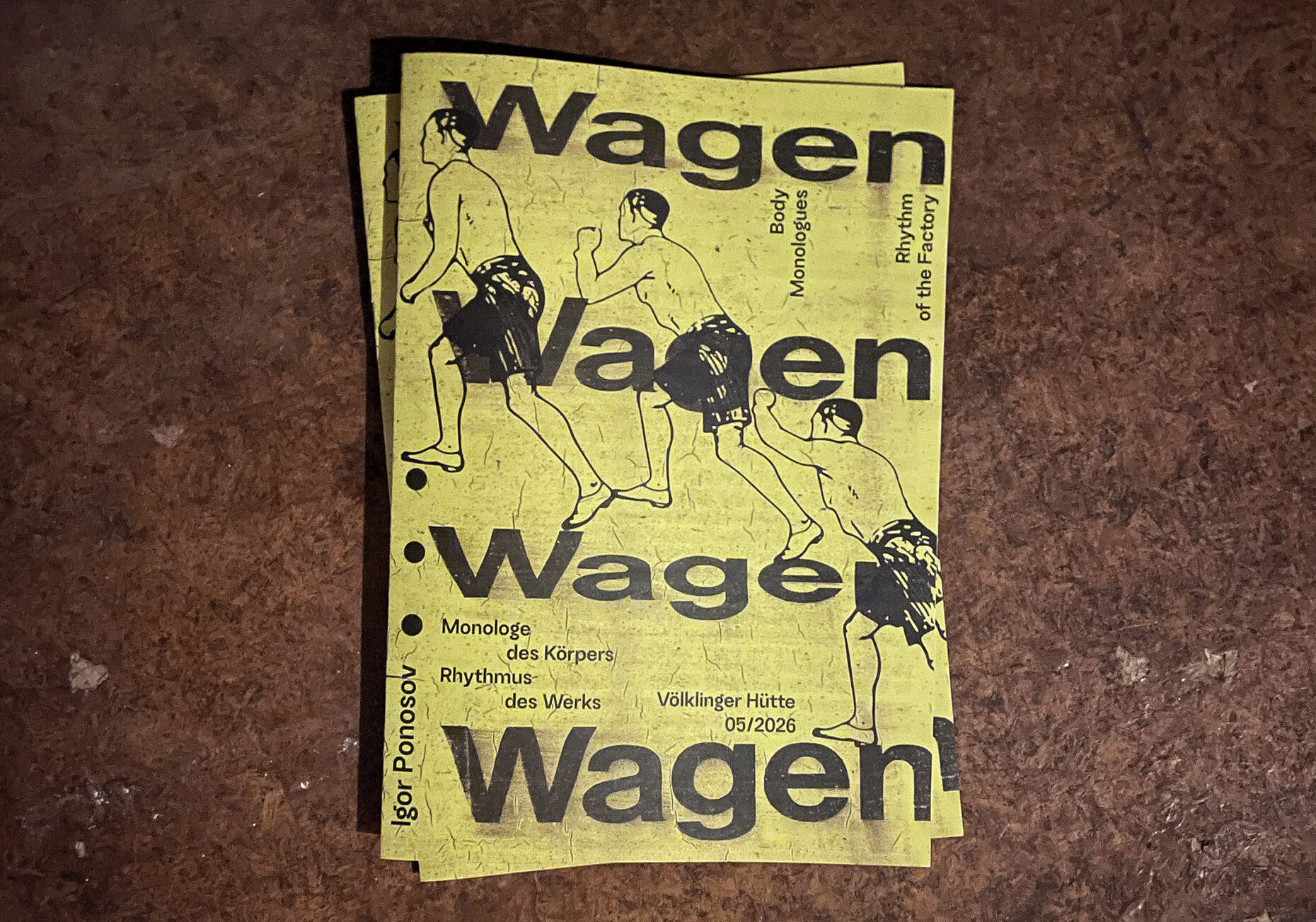
I found the answer in the archives. I “decoded” hundreds of photographs and video recordings of factory workers, transforming their movements into graphic patterns. These patterns resulted in a choreographic score – a biomechanical theater.
Over 100 years ago, the director Vsevolod Meyerhold proposed transforming the actor into an ideal mechanism, eliminating superfluous emotions and subordinating the body to the rhythm of work – he called these ideas “biomechanics.” Drawing on physiology and the theory of movement optimisation, he created a system in which gestures become as precise as the stroke of a piston. Meyerhold’s ideas proved almost frighteningly in tune with the spirit of industrialisation: man (the actor of the future) and machine were to work in synchrony, without disruption and without reflection.
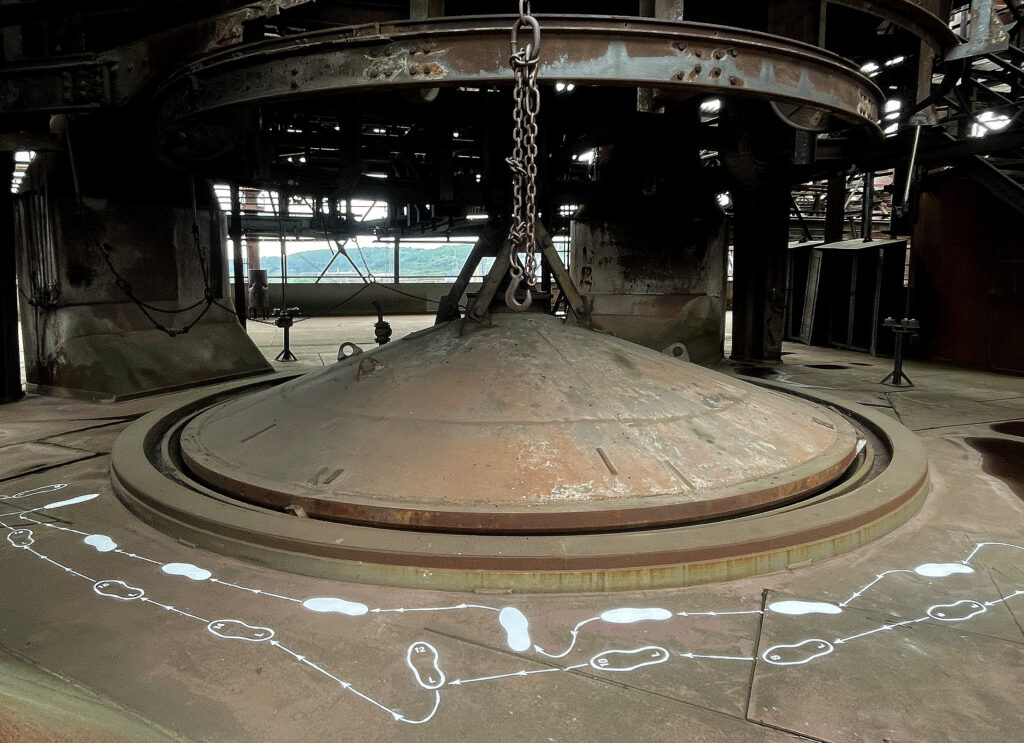
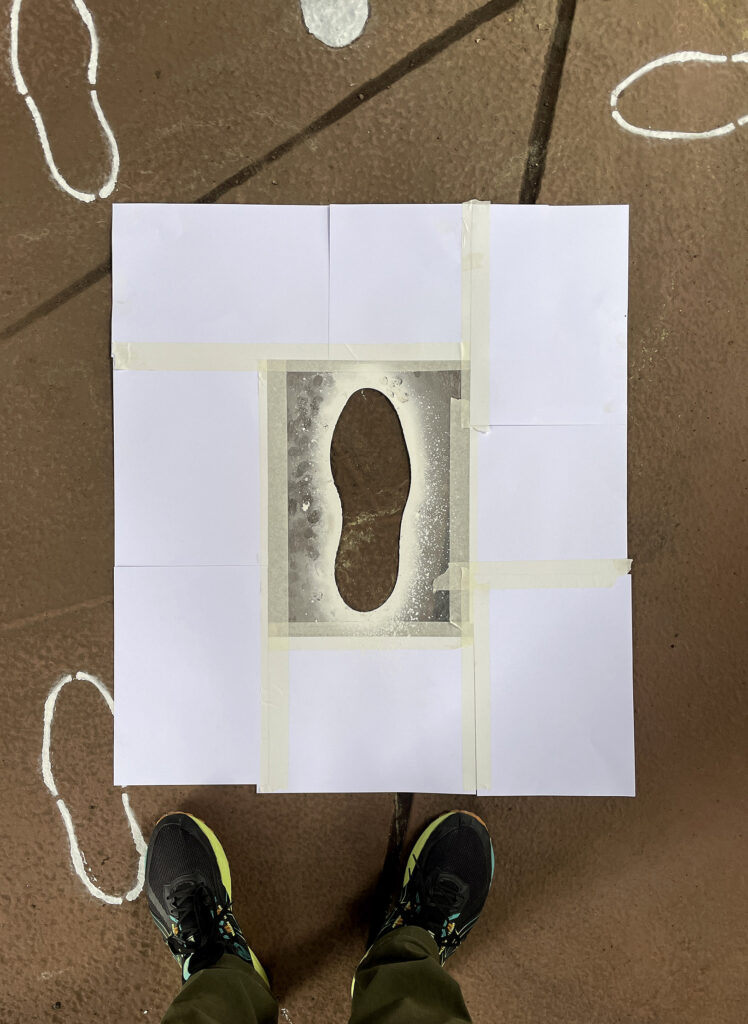
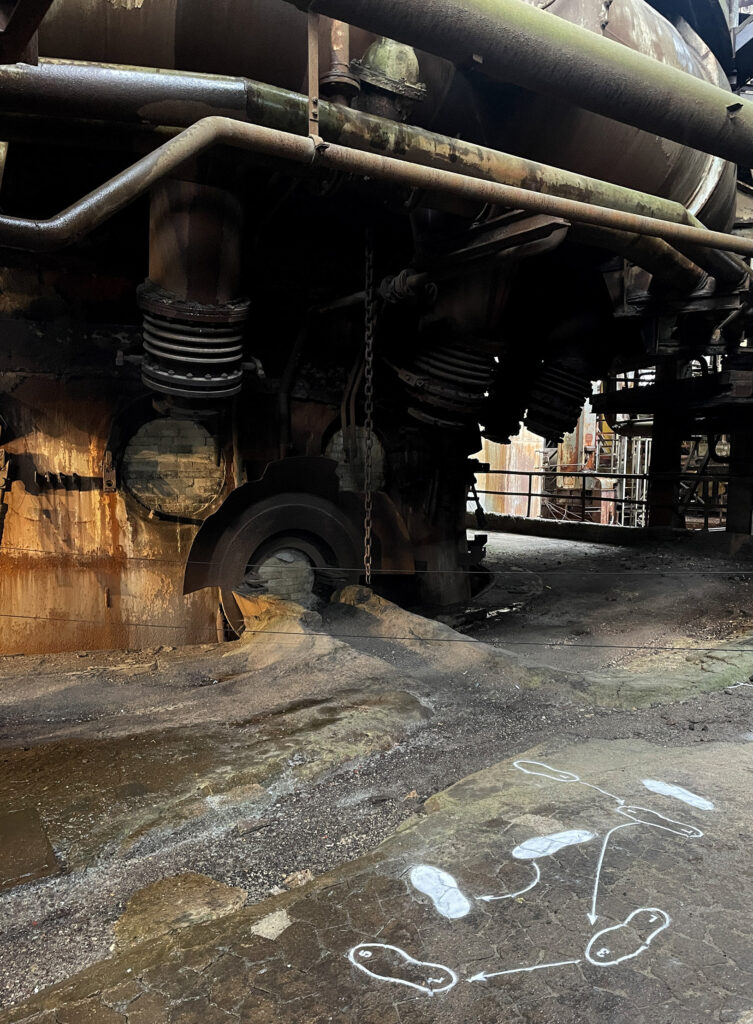
My project is a bridge spanning a century. It is a tribute not just to an era, but to the specific people whose physical labour forged the glory of the factory. The project comprises a newspaper, an animated film and floor paintings inside the Völklinger Hütte. The highlight was a performance in which the movement patterns, observed in the ironworkers of the past are brought to life.
Variable dimensions. Stencils, chalk spray paint.
Thanks to Stanislav Dobrovskiy and Marta Paknite.In frame of the project has been published a newspaper with all graphic patterns and schemes, here is pdf.